
We're Here to Help
Why Seek Legal Counsel?
Did medical negligence result in you or a loved one suffering a devastating injury as a result of a stroke? To seek compensation, victims must prove both that the physician was responsible and the extent of their damage and loss. The process of navigating medical negligence cases is very time-consuming and complicated — and failure to pursue the case properly may lead to losing the ability to receive financial compensation.
Our experienced lawyers have the knowledge and resources necessary to pursue these cases. Get a free consultation with our experienced and compassionate attorneys. We specialize in stroke-related medical malpractice cases, and we fight for stroke victims and their families in Maryland, ensuring they receive the justice and compensation they deserve.
What Is a Stroke?
When Blood Flow to the Brain Is Blocked or Reduced
A stroke occurs when blood flow to the brain is blocked or reduced, depriving brain tissue of oxygen. This can result in permanent brain damage, disability, or even death if not treated immediately. There are two primary types of stroke:
Ischemic Stroke — caused by a blood clot blocking an artery.
Hemorrhagic Stroke — caused by a ruptured blood vessel in the brain.
Symptoms of a stroke can include:
- Sudden numbness or weakness, especially on one side of the body
- Confusion or trouble speaking
- Vision problems in one or both eyes
- Dizziness or loss of coordination
- Severe headache with no known cause
When these warning signs appear, doctors must act fast. Failure to diagnose or properly treat a stroke can lead to irreversible harm — and that's when we step in to hold negligent medical providers accountable.
Often there are early warning signs, known as a transient ischemic attack or TIA, that present before a devastating stroke — numbness in the face, arm, or leg, usually on one side of the body; difficulty speaking or understanding speech; vision problems; dizziness or loss of balance; confusion or difficulty thinking. These symptoms typically last for a few minutes to a few hours and then resolve on their own. If a TIA is properly diagnosed and treated, a larger and more devastating stroke, resulting in lifelong disability, can be prevented.
How Negligence Happens
You Might Be Entitled to Compensation
We represent individuals and families who have suffered because of:
Failure to Diagnose a Stroke
Doctors and emergency room staff must recognize stroke symptoms immediately. If your stroke was dismissed as something minor — or not diagnosed at all — you may have been denied life-saving treatment.
Improper Stroke Treatment
If your medical team failed to administer the proper medications (like tPA or dual anti-platelet therapy), provide necessary mechanical or surgical intervention (like a thrombectomy), follow proper stroke protocols, or properly manage blood pressure, they may be liable for medical negligence.
Overlooked Stroke Warning Signs
Doctors and nurses must recognize stroke symptoms, even in younger patients or those without obvious risk factors. If a stroke should have been suspected but was ignored or mistaken for another condition, the consequences can be tragic.
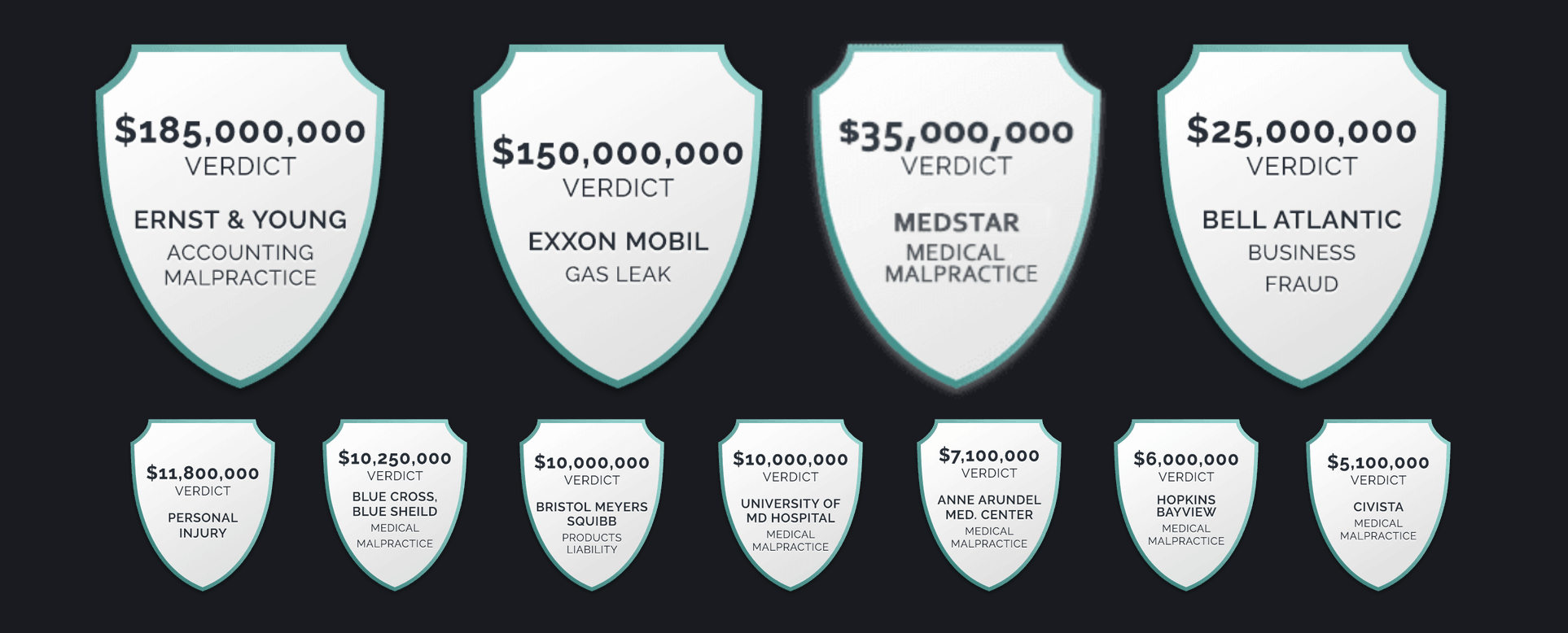
Our Results Speak for Themselves
Over $700,000,000 in Verdicts and Settlements
Attention Maryland residents: your well-being comes first. We provide personalized legal guidance, compassionate support, and aggressive representation — over 100 years of combined experience working for you, from a team of compassionate legal representatives for stroke victims.
Justice for Stroke Victims and Their Families
What Compensation Can Cover
We know that a stroke can change everything — your health, your independence, and your financial stability. That's why we fight aggressively for compensation to cover:
- Medical bills and ongoing care
- Rehabilitation and therapy costs
- Lost wages and future income
- Pain, suffering, and emotional distress
- Wrongful death damages for grieving families
- Long-term residential care and home health care
- Home modifications (handicap accessibility) and handicap-accessible transportation
- Durable medical equipment (wheelchairs and other assistive devices)
- Medications — and many other things
Your free review looks at what happened — a stroke that wasn't diagnosed but should have been, a diagnosed stroke that wasn't treated properly, or a stroke that should have been suspected but wasn't — and when it happened, whether within the last 3 years or longer ago.
Exceptional Peer Recognition
True mavericks in the field of trial advocacy. Start Your Free Review